

WAITING ROOM WILL CERTAINLY BECOME OUT OF DATE AS NEWER COSMETIC TREATMENTS ARE INTRODUCED

April 21st, 2008 by Dr. Jeffery Raval, MD FACS
Posted in Facial Rejuvenation, Injectible Fillers, Restylane

DENVER, CO—One of the standard features of any physician’s office in the last half of the last century as a waiting room.  Yet waiting at all anymore isn’t what patients expect –even when it comes to the results from their treatment.

A lot of that has to with the rejuvenating cosmetic treatments that doctors like Dr. Jeffrey Raval are able to perform that make an immediate improvement—and require no downtime.

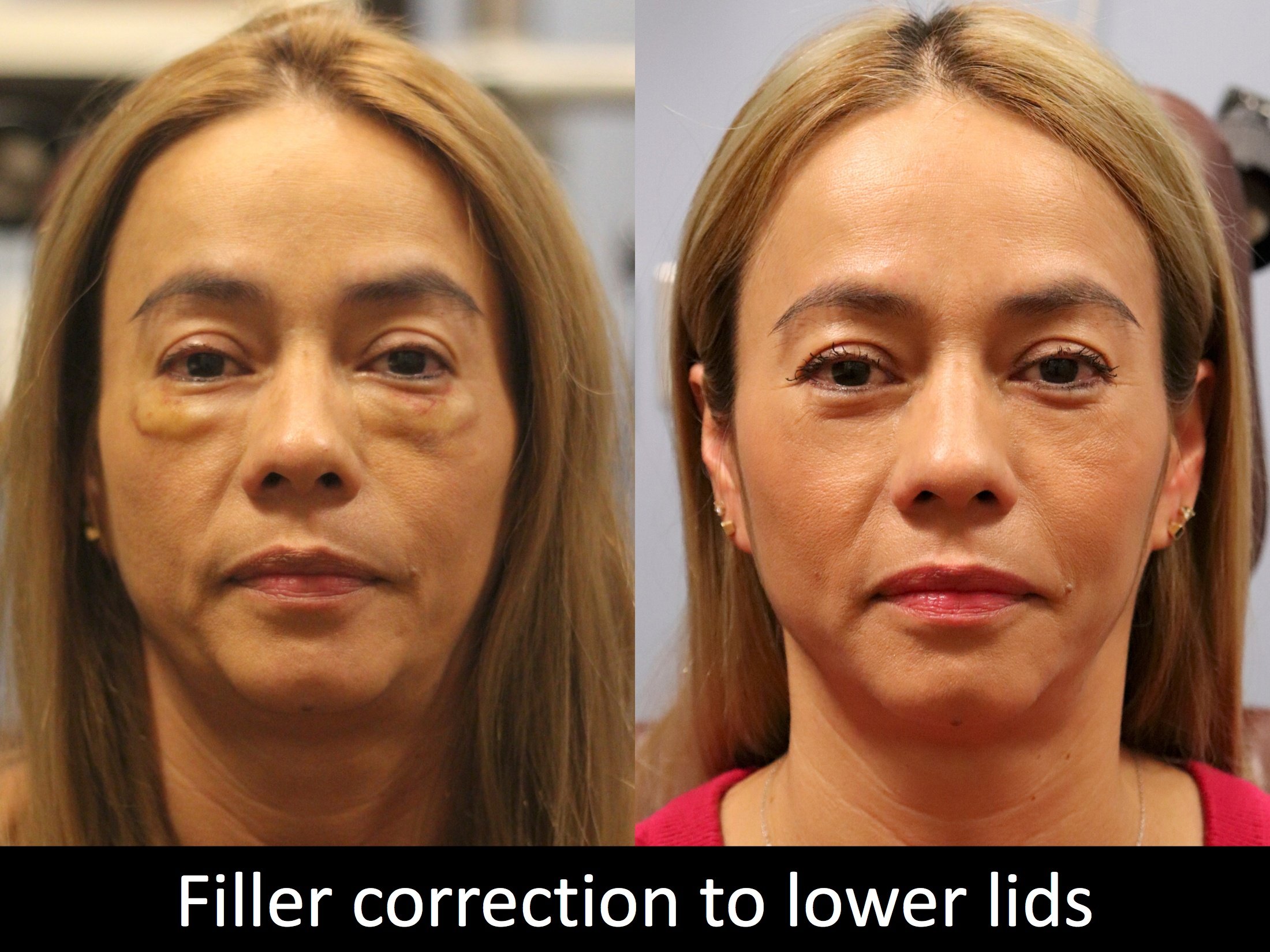
At the office of triple board certified Dr. Raval, some of those immediate treatments include the liquid facelift. Using filler materials, like Juvederm and Restylane plus BOTOX, Perlane and Restylane in different combinations, Dr. Raval is able to concoct a customized and immediate facelift of sorts for patients. Within 45 minutes to one hour, the patient leaves the doctor’s office looking years young. In most cases, Dr. Raval, a facial plastic surgeon who concentrates on the head and neck exclusively, doesn’t even have to numb the patient first, saving even more of the patient’s time. (When anesthesia is used on a patient, the patient is required to come early to the appointment to allow the numbing effect to take hold, that’s true even of topical numbing ointments.)

No two people receive exactly the same amount of filler in the same location in the same quantity. But two rules generally apply: BOTOX is used only in the top half of the face including the forehead, between the eyebrows and around the eyes; while fillers are generally used in the lower half of the face.

“It’s the grape to raisin theory,” explains Dr. Raval of the newly popular liquid facelift. “The face starts out on a young person as full and firm. Over time, the face loses its elasticity and its ability to produce collagen. The skin becomes lax and droops and wrinkles and creases begin to form as the jowl or jaw line drops too.

Instead of going under the knife, more patients are opting for non-invasive procedures like fillers and BOTOX to extend the years before a facelift would be the optimum recommendation that Dr. Raval would make.

In a recent liquid facelift performed in 45 minutes or less in the office, Dr. Raval used one syringe of Restylane around the eyes to and in the cheekbone area to plump up the area under the cheekbones that had become sunken. He used one syringe of Radiesse in the lower face along the jaw line to fill in where gravity had begun to pull downward on the face, making the jaw line uneven and aged looking. And he used 45 units of BOTOX around the eyes, forehead and frown area (10 units to the forehead, 10 around the eyes and 15 in the frown area) to smooth away wrinkles. In some cases, Dr. Raval says, these kind of frown wrinkles especially can leave a person looking angry; just a small amount of BOTOX smoothes away the years and the negative expression.

Immediately after a liquid facelift, the patient can reapply makeup and resume routine activities. “No waiting for results and no downtime make this a treatment that renders immediate gratification,” adds Dr. Raval, who has performed hundreds upon hundreds of liquid facelifts since fillers and BOTOX were approved by the FDA.

Patients are scheduled for a recall visit with the doctor two weeks after a liquid facelift at which time Dr. Raval touches up any areas that require more filler or BOTOX.

Dr. Raval finds that the fillers are optimum over a fat transfer which was the superior treatment only years ago. “Fillers have come such a long way in recent years plus they last longer than natural fat transferred from one area of the body to another. There is very little if any discomfort and the results are so impressive that patients leave their appointment looking refreshed and feeling younger.”

No Comments »

The Eyes Have It (or they don’t)

March 13th, 2008 by Dr. Jeffery Raval, MD FACS
Posted in Blepharoplasty, Eye Surgery

It used to be that surgeons removed the fat from around a woman’s eyes when performing a blepharoplasty (eyelid or under-eye surgery). Doctors reasoned that excess fat had to be eliminated in order to tighten the appearance of the eyes.

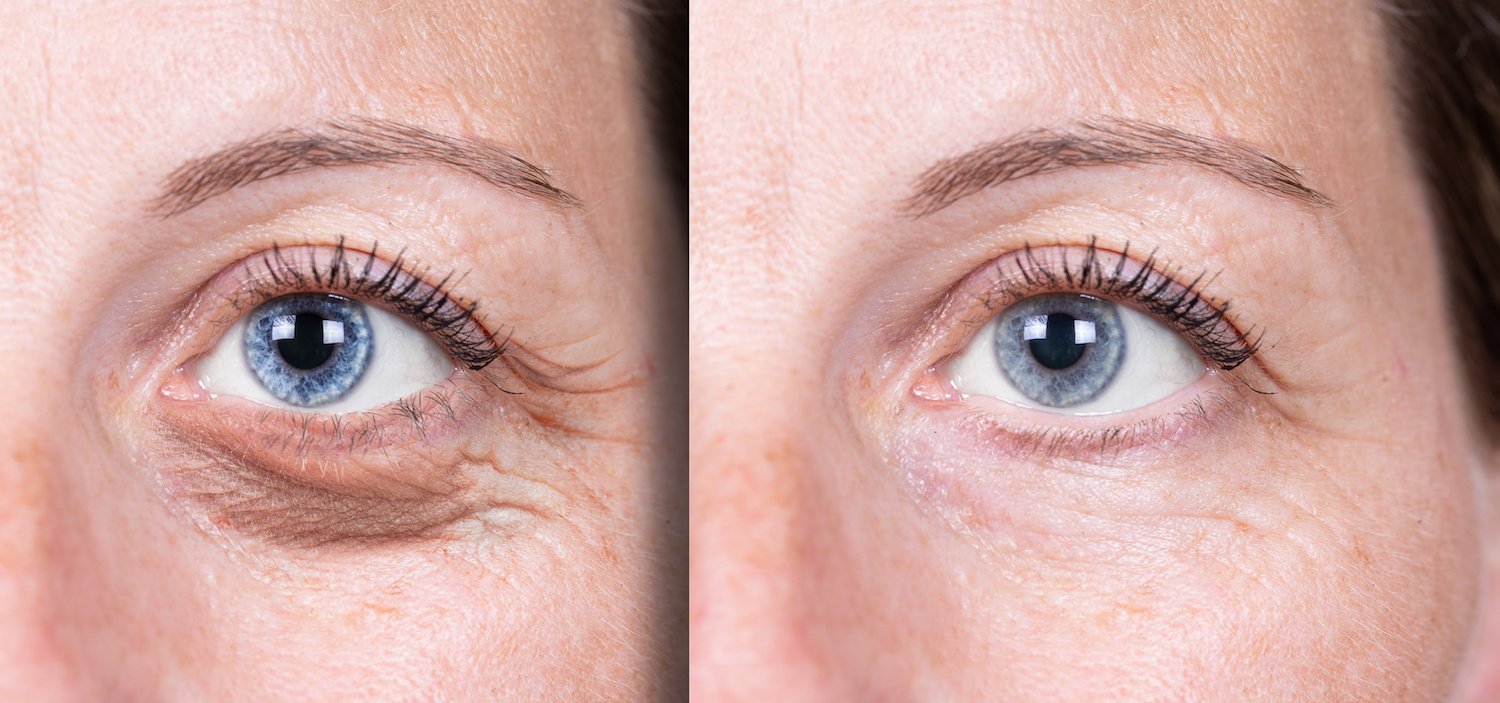
New techniques have changed all that, according to Jeffrey R. Raval, MD, FACS, triple-board certified facial plastic surgeon who has performed rejuvenating eye surgeries on hundreds of patients—men and women. Instead of removing the fat, Dr. Raval is doing more fat repositioning procedures, building up the wall of fat in the skin under the eyes and adjusting the fat cells in that area. The result is a more youthful appearance rather than the sunken, hollow-eyed look when the fat under the eye is removed.

“The eyes are the first area of the face to show one’s age,” says Dr. Raval. As people age, muscles weaken, skin stretches and fat accumulates around the eyes causing the appearance of fatigue and stress. More than 230,000 people a year undergo eyelid lifts to regain a younger, firmer looking eye area. The procedure can be performed on either the lower or upper eyelids or both and can be combined with other facial procedures.

Upper eyelid surgery is more likely to involve fat removal, explains Dr. Raval. That’s because the upper eyelid tends to droop as we age, and the accumulation of fat above the eyes needs to be reduced slightly to achieve a more sculpted, youthful shape that enhances the brow and makes the upper eyelid visible again.

One complaint that many women have prior to seeking a blepharoplasty is that they go to the effort of putting on eye make-up that no one can see because their eyelids are too puffy.

Patients with exceptionally droopy upper eyelids can find that their vision is impaired. A blepharoplasty to correct that condition is sometimes covered by medical insurance, as it’s not considered simply a cosmetic surgery.

Contact Dr. Jeffrey Raval for a consultation regarding blepharoplasty surgery or fat repositioning by calling 303-744-2300.

No Comments »

Help. I’m wearing my mother’s neck

January 21st, 2008 by Dr. Jeffery Raval, MD FACS
Posted in Neck Lift, SkinTyte

I recently had opportunity to be videotaped in a class and unlike other times I’ve been filmed, the class I enrolled in meant playback after playback of this particular tape. The thing that struck me was my neck and how much it’s thickened and wrinkled in the last few years. I’ve also noticed that I have a section of skin on my neck that’s paler than the lower neck, almost as if all that time I spent in the sun and in sunbeds years ago has caught up with me…it appears I must have had my neck tucked down while tanning! Rather than wear turtleneck shirts for the rest of my life to hide my aging neck, I’d like to know what I can do. I find myself craning my neck or elongating to hide the wrinkling, and that’s really doing nothing but making me look like a hamster. Help!

Dr. Jeffrey R. Raval, triple-board certified plastic surgeon who specializes in head and neck surgery, recommends that people who aren’t yet ready for a full-blown neck lift, which involves general anesthesia and several weeks of downtime, consider first the Sciton laser pulsed light photofacial treatment in companion with the Sciton SkinTyte treatment, a series of three to five laser treatments, depending on the severity of the laxity of one’s neck skin. SkinTyte is non-invasive and takes less than an hour per treatment using only a topical anesthesia to eliminate any discomfort while the SkinTyte laser is passed over the neck area in several repetitions.

An additional treatment of BOTOX injections can be recommended to smooth out the rings or lines that sometimes develop around the neck.

Dr. Raval does perform necklift surgery under general anesthesia, usually as part of a facelift but sometimes this procedure can be performed alone. The repair of the platysma muscles helps redefine the neck. The surgery of the neck is reached through incisions around the ears and through tiny incisions under the chin. When there is a good deal of extra skin, it needs to be removed as part of the lift. This placement of the incisions permits hiding the scars behind the ears. There is some degree of swelling and possibly bruising in most patients but usually very little in the way of pain or discomfort. Swelling is mostly resolved in two to three weeks, but some swelling will persist. Most patients are quite presentable within one to two weeks.

To make an appointment for a consultation with Dr. Jeffrey R. Raval, call 303.744.2300.

No Comments »

A look back at eye surgery five years earlier

January 21st, 2008 by Dr. Jeffery Raval, MD FACS
Posted in Blepharoplasty, Eye Surgery, Facial Rejuvenation

My mid-50s girlfriends got together last week for dinner—something we’ve been doing for nearly 30 years every couple of months. It had been half a year since I’d been able to join them and while this is a group of women that’s healthily interested in keeping up their looks, I could see a lot of difference—more wrinkles, deeper frown lines, dull complexions. It caused me to take a good hard look at myself in the mirror the next morning and while there’s plenty more I could elect to do for myself, I’m thoroughly pleased that four years ago I underwent a blepharoplasty in Dr. Raval’s care.

As Dr. Raval pointed out to me then, the eyes are the first place on the face to give up our age as a rule. My eyes had begun to have thicker lids, and when I smiled for family photographs, my eyes then looked more like narrow slits than the eyes I had as a much younger woman.

Besides the blepharoplasty for upper eyelid surgery, Dr. Raval performed an under-eye surgery to re-build the wall of fat under my eye that had in the course of aging drooped, allowing my lower eyelids to show slight bags on most mornings. Five years later, my eyes are the youngest looking part about me when I get up in the morning. I don’t have any of the “cat-eye” look that some of my acquaintances seem to have after their eye surgeries either, and I’m so glad for Dr. Raval’s skill as a surgeon. He explained to me prior to my lower eyelid surgery that the cat-eye look is a matter of technique versus more than anything else. One of my friends had surgery performed by an eye doctor who advised her to forego the under-eyelid surgery because the cat-eye look would be the result. She now says she’s disappointed that she didn’t go ahead with the under-eyelid surgery by Dr. Raval instead.

It’s amazing to me after five years time that the eyes-wide-open look that blepharoplasty can afford me is still as becoming as it was a month after surgery.

This is a procedure I would never regret and will recommend to anyone who asks!
–Mid-50s and seeing clearly.

To make a consultation appointment with Dr. Jeffrey R. Raval, triple-board certified facial plastic surgeon, call 303-744-2300. Dr. Raval has practices in Denver and Lone Tree, Colorado.

No Comments »

The Age of Your Face

December 18th, 2007 by Dr. Jeffery Raval, MD FACS
Posted in Nose Job, Rhinoplasty

Okay, here’s the bad news. Not only does your skin wrinkle and sag as you age, but your nose drops too.

Here’s the good news: there is a solution in the case of a nose that drops significantly adding years to the appearance of one’s face.

Dr. Jeffrey Raval, board certified facial plastic surgeon, has raised the noses of aging patients surgically and in doing so has eliminated years from their appearance. Often this type of surgery is in companion with other facial surgery, i.e. facelift or brow lift, addressing all at the same time.

“The nose ages, dropping as we gain years,” explains Dr. Raval, who is also a board certified facial plastic surgeon. For patients who have a particularly elongated nose, the advancement in years means their nose grows disproportionately long for their faces, aging their appearance unnecessarily.

Known as The Nose Guy, a credit given to him by fellow surgeons who apprise his nose jobs as being exemplary, Dr. Raval is able to turn back the clock in a patient’s appearance by elevating the nose just enough to look more attractive and youthful while retaining its full and necessary function for breathing.

That’s another plus to Dr. Raval’s capabilities: he’s board certified in both ENT and facial plastic surgery so that he understands both the aesthetics and function of the nose inside and out and can perform surgery to address both aspects—both very necessary aspects—of the nose.

No Comments »

Kids with Dad’s Noses

December 18th, 2007 by Dr. Jeffery Raval, MD FACS
Posted in Nose Job, Rhinoplasty

“He’s got your eyes,” joyful grandparents coo at the infant they cradle in their arms while seeing in their memory their own son, father to this baby. While an infant may resemble his mother’s or father’s baby pictures at birth, the likelihood of the child manifesting other inherent traits, like a large nose, are likely to show up as the child gets older.

That inherent propensity along with the fact that the first thing that’s noticeable when you see someone’s face is usually their nose when they’re younger and their eyes when they’re older, make nose jobs a real consideration today for young people with outsized noses.

Dr. Jeffrey Raval prefers to postpone nose surgery on a child until they are past puberty and their nose has reached the size it will remain.

But some unique cases call for surgery before that time.

Take for example the case of the young teenage girl who had a natural stage presence and loved to act. In elementary school and junior high, she’d found her niche. But when she got to high school and was as anxious to star in the school play, a thoughtless boy had ridiculed the size of her nose. It was humiliating enough to the girl that she withdrew from acting and increasingly retreated to being a solitary child, keeping to herself.

Her parents were aware of the ridicule their daughter had suffered by her classmate and sought out Dr. Raval to assess their daughter’s candidacy for a nose job. She was a fit for surgery, Dr. Raval determined.

“This was a case that surgery totally changed a life,” says Dr. Raval. “I could see an entire revision of her self-esteem and personality.”

The young lady regained her confidence and reinvested herself in participating in stage plays, regaining her stage presence because of her innate talent, only now without the embarrassment of having a naturally outsized nose. Hollywood will likely chronicle her story years from now.

“It’s this kind of surgery that is so rewarding,” adds Dr. Raval.

No Comments »

The Nose Redeux

December 18th, 2007 by Dr. Jeffery Raval, MD FACS
Posted in Nose Job, Rhinoplasty

Sometimes a first-time nose job does not result in the nose a patient wants.

That’s where Dr. Jeffrey Raval has gained his stature among fellow physicians in Colorado and the entire western region in revision rhinoplasty. He’s even known as The Nose Guy among surgeons.

The revision rhinoplasty is the toughest nose surgery of all to perform, explains Dr. Raval. “There is a lot of scaring after the first nose surgery. You [the surgeon] never know quite what was done in the initial surgery. Oftentimes, the nose needs to be rebuilt because the biggest problem the second surgeon encounters is that too much of the nose—bone and cartilage—was removed the first time.”

One doctor who sought out Dr. Raval for his repeat nose surgery actually shed tears upon completion of the second surgery. Tears of happiness, because the nose job that had gone so wrong at the hands of a different doctor previously, was corrected to exactly the look the he wanted with his revision rhinoplasty by Dr. Raval.

In the years he’s been in practice in Denver, Dr. Raval has seen his patient base for nose jobs extend to cover many states in the western region. Patients have come to him from as far away as Wyoming, Idaho and Nebraska, having heard he’s the go-to surgeon for the most well done first-time and repeat rhinoplasty surgeries.

No Comments »

The Deviation in Deviated Septums

December 18th, 2007 by Dr. Jeffery Raval, MD FACS
Posted in Nose Job, Rhinoplasty

Maybe you know someone who has had surgery for a deviated septum. Their nose, they tell you, was crooked on the inside.

The thing is everyone has some level of deviation of their septum. Whether that deviation is big enough to warrant surgery versus not, is largely dependant on the functionality of their nose.  If the patient has a difficult time breathing through their nose from a deviated septum then their septum may need to be straightened.

“No one has a perfectly shaped nose,” explains Dr. Raval. “When the shape of the nose creates a functional breathing problem is when the nose may require surgery.”

Many times evidence of a deviated septum on the inside of the nose is reiterated by the poor shape of the outside of the nose—with the patient having suffered an injury or just by the genetics he or she inherited.

Dr. Jeffrey Raval is board certified in ENT (ear, nose and throat) and in facial plastic surgery and reconstructive head/neck surgery. The training he has in both the outward appearance of the nose and the inner functions give him an advantage surgically in understanding the necessary function as well as the beauty of how the nose works and looks.

No Comments »

The Shape of Today’s Nose

December 18th, 2007 by Dr. Jeffery Raval, MD FACS
Posted in Nose Job, Rhinoplasty

It used to be that nose jobs, rhinoplasty, in the ‘60s, 70’s and 80’s resulted in a lot of upturned pixie noses. Large noses were minimized into dramatically smaller ones, upturned at the tip. The problem with this, explains Dr. Jeffrey Raval, is that the aesthetic and function didn’t work in concert for the patient.

One of the missing parts about nose jobs like this is the reason for newer techniques in nose jobs today. “When we take something out of the nose, we realize we weaken it and we have to put something back,” says Dr. Raval.

Yes, even in the case of making a nose smaller, a new application of cartilage is necessary to help reshape the nose to be most natural looking and better functionally.
The cartilage can be harvested from one’s own body—like from the nose itself or the ear—or is readily accessible from surgical suppliers.

In the case of a person who has had nose injuries—one or more—in athletics, especially, the need for additional cartilage is apparent because the inside of the nose has collapsed, leaving a flattened or mashed look. Inserting bone and/or new cartilage will remedy that.

Another thing that happens after a person has suffered an athletic injury to the nose, or even in a car accident, is that the nasal cartilage may be lost and has to be replaced. This is also true in the case of a revision rhinoplasty—repeat nose surgery when a first nose job has been a failure.

Dr. Jeffrey Raval is known among fellow physicians as The Nose Guy for his expertise in revision nose surgery.

No Comments »

Knowing the Nose

December 18th, 2007 by Dr. Jeffery Raval, MD FACS
Posted in Nose Job

Because Dr. Jeffrey Raval is board certified in both ear, nose and throat and as a facial plastic surgeon, he knows the nose inside-out. That means he has a full understanding of the aesthetic appeal of a nose from the outside as well as intimate knowledge about the functionality of the nose on the inside, even the sinuses.

The benefit: patients net his surgical expertise on all aspects of the nose and its appearance and function.

When a person has a crooked nose, Dr. Raval explains, they don’t breathe as well and they can possibly suffer from sinus problems. Dr. Raval can address all of those issues in one surgical procedure. Another plus: because patients have a functional problem with their nose that Dr. Raval corrects surgically while simultaneously addressing the aesthetic problem they have, their insurance will often cover the functionality portion of the surgery which reduces their cost of the overall surgery. That’s a plus because rhinoplasty for aesthetic purposes only is considered cosmetic and is therefore not usually covered by insurance.

No Comments »