What is Botox?
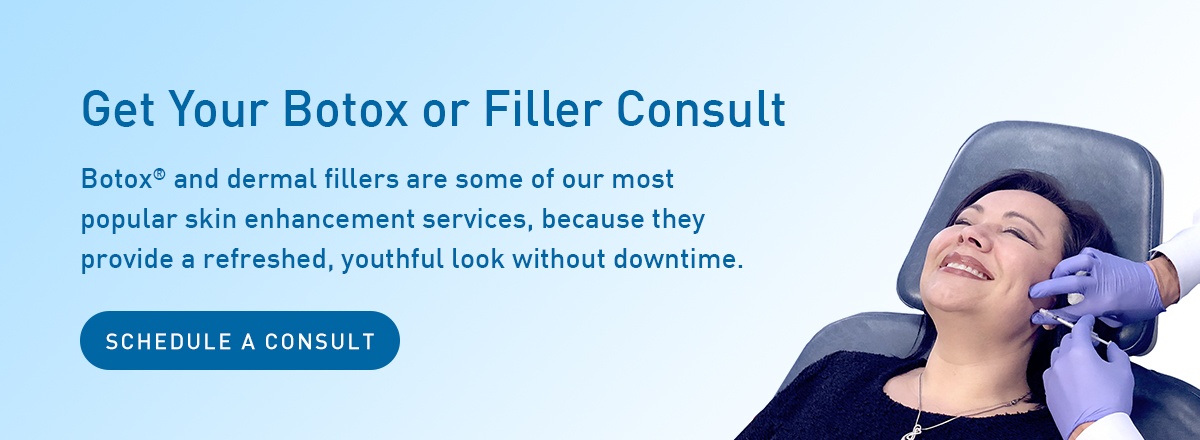
Botox is the single most common medical cosmetic treatment performed each year. Environment, time and daily stress take their toll on healthy skin. Botox does not stop skin from aging, but it can help give the face a rejuvenated appearance. And it can help retain that younger look by blocking new wrinkles. There are numerous amazing benefits!
Botox injections are most commonly used to treat dynamic wrinkles. These are fine lines and wrinkles that form when we smile, squint, or frown. When we’re young, visible lines appear and then disappear as our facial expressions change. Over time, the skin “remembers” the wrinkles and they become permanent forehead lines, crow’s feet, and frown lines. Botox injections slightly “paralyze,” or calm, the muscles in the treated area so they contract less dramatically when used to squint or frown or smile.
How does that work? Botulinum is a neurotoxin. It works by disrupting the signals nerve cells normally send to muscles to activate them. These signals are actually a chemical called acetylcholine. When the muscle receives less acetylcholine, it contracts less.
Not Just for Wrinkles Anymore
Botox is also used to treat hyperhidrosis, or excessive underarm sweating. In this case, Botox temporarily blocks the nerves that activate the sweat glands. And there’s more – researchers are finding an increasing number of instances in which Botox’s muscle-calming properties can effectively treat medical conditions as well as cosmetic concerns.
At Raval Facial Aesthetics, we use both Botox and its cousin Dysport, a slightly different formulation also based on onabotulinum toxin A that was introduced in 2009. Dr. Jeffrey Raval, Medical Director of Raval Facial Aesthetics and RMLA, is a nationally recognized expert in Botox injection. So respected, in fact, that he trains other providers from around the country in precision use of this technique.
As noted at the beginning, Dr. Raval uses Botox and Dysport to treat men as well as women.
Botox Injection Areas
Whether you choose Botox injections for cosmetic or therapeutic reasons, the Botox works in much the same way – by reducing the activity of muscles that trigger unwanted responses within the body. Here are some of the key challenges that respond well to Botox injections.
Forehead
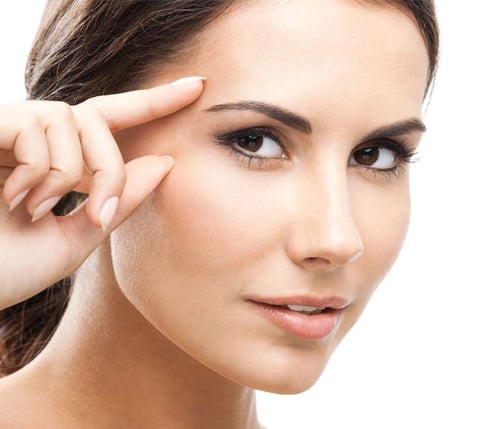
As we age, some of us start to see a series of horizontal wrinkles forming across our forehead. The effect is a look that is not only older but puzzled or unhappy. Botox injections can smooth your brow, making it easier to maintain a more youthful and positive expression. During your consultation with Dr. Raval, you can discuss whether a non-surgical brow lift using Botox is right for you.
Frown Lines
Frowning can contribute to forehead lines, but it also causes glabellar lines, the vertical ones between your eyebrows (also called your 11’s). Just getting older can create these visible wrinkles, too. Often they become permanently visible even if you are not frowning, due to natural loss of volume and skin elasticity. Botox injections can relax the muscles, so you can do away with perpetual frowny face.
Crow’s Feet
Squinting is a natural response to bright light, especially sunlight, and when you live in the Denver area there is plenty of sun. Over time, it’s easy to develop lines at the outside of the eyes – something we all know by the unfortunate name of crow’s feet. Botox can chase away those wrinkly “footprints.”
Fine Lines
People who smile a lot can develop wrinkles around their mouth as well as their eyes. Botox can relax the relevant muscles, so your smile remains bright and sincere without the deepening creases.
Neck Banding
Neck banding – the vertical droopy lines that run from the collarbone up to underneath the chin – occur when the platysma muscle contracts toward the center of the neck over time. (Unlike other muscles, the platysma is not attached to bones with ligaments that would hold it in place.) Botox injections relax the contracted muscles, smoothing the banding.
Botox to Treat Hyperhidrosis
Most people handle unwanted underarm perspiration by applying deodorant or antiperspirant. For some, however, that’s not enough to alleviate their excessive sweating. In some cases, even stronger prescription-only products don’t reduce sweating. The resulting damp clothing and odor can steal your confidence in both personal and work situations.
Botox injections in the armpits work when other methods do not, by calming the muscles and nerves that activate sweat glands. The results can last for months. That beats constantly worrying about your appearance, having to tote around a fresh shirt “just in case,” or (you’ve tried this, haven’t you?) stuffing wads of toilet tissue under your arms. It also beats over-the-counter and prescription medications that often don’t work. And it certainly beats invasive surgery to correct the problem.
Some studies suggest that Botox injections are safer for the body than antiperspirant when it comes to reducing underarm sweating. That’s because antiperspirants (and deodorants, too) kill naturally-occurring bacteria on the surface of the skin. We like that, because those bacteria cause unwanted odor. However, antiperspirants also kill bacteria that work positively to keep our underarm skin healthy. Botox curbs sweating without affecting that important “biome.”
Botox to Treat Bruxism
Clenching your jaws and grinding your teeth is bad for you. Called bruxism (brux are teeth), this condition can damage the enamel on your teeth and even crack them so they have to be repaired or replaced. Nighttime grinding can keep you awake, and if the sound is loud enough, it can keep others awake as well. Grinding and clenching your teeth can also cause headaches and damage the temporomandibular joints that allow your jaws to operate. That can affect your ability to speak and chew, and it can be painful.
There is no cure for bruxism. However, just a couple of quick Botox injections into the muscles on each side of the face (just in front of the ears) can curb undue clenching and grinding.
Other Uses for Botox
In addition to these areas, doctors now use Botox injections to treat more than 20 medical conditions ranging from overactive bladder and depression to crossed eyes. (Interestingly, crossed eyes and uncontrollable blinking were the first conditions ever treated with Botox.)
Whatever your reason for considering Botox injections, the single most important factor in determining successful results is the provider you choose. Botox can do amazing things to improve your facial appearance and/or address a variety of health concerns, but getting those results requires medical knowledge and injection skills. Botox is not a spa treatment.
Botox for Migraines
We’ve just talked about several common ways Botox injections can help improve your appearance, relieve painful jaw clenching and prevent excessive underarm perspiration. But there is another, lesser-known benefit of Botox -- treating chronic migraine headaches. This treatment isn’t new. Botox was approved for this use in 2010, but perhaps thanks to television advertising, this alternative is now gaining greater attention.
Anyone who suffers from migraines knows how comprehensively debilitating they can be. The medical community divides migraines into two categories:
-
Episodic – people who have 14 or fewer headache days each month.
-
Chronic – people who suffer 15 or more headache days, with headaches lasting longer than 4 hours on at least 8 of those days. More than 500,000 adults in the US fall into this category.
If you suffer from chronic migraines and are 18 or older, you could be a candidate for Botox injection treatment. It’s worth looking into, because Botox is proven to reduce both frequency and severity of migraines. There have even been instances where this treatment has entirely eliminated headaches.
As yet, studies have not shown whether Botox is effective in treating episodic migraines, so we will have to wait to learn more about that. Please note that we do not treat migraines at Raval Facial Aesthetics, but will gladly refer patients to a highly skilled neurologist.
How Does Botox Work to Reduce Headaches?
The dosage and injection pattern used to treat chronic migraines are very different than those used to treat wrinkles, sweating or bruxism. While other types of treatments require very few injections, there are 31 injection sites for chronic migraine, in the forehead, temples, bridge of the nose, back of the head, neck and just above the shoulder blades on the upper back.
As with all Botox injections, the needle is very thin and sharp and a local anesthetic is applied first, so the procedure is not painful. The entire process takes just 10-15 minutes, and you can go right back to whatever you were doing afterward.
You won’t feel immediate relief but you should notice improvement within a few weeks. Botox injections for migraines are recommended every three months, and over time patients continue to see increased improvement.
That said, some patients still need to take triptans or some similar medication for particularly acute headaches. (The Botox will not negatively affect the efficacy of these medications.) In some patients, Botox can reduce the impact of specific triggers, such as stress, particular foods, lack of sleep or menstruation, whereas in others Botox may be somewhat less effective in the face of these triggers.
There are a few possible side-effects to chronic migraine treatment. The most common are pain or stiffness in the neck and muscle weakness in the neck or upper shoulders. Some patients also experience droopy eyelids or tiny bumps on their forehead. Typically, these side-effects dissipate within a few days. If they don’t, or you experience more severe after-effects such as general muscle weakness, blurred vision, or problems swallowing or speaking, you should consult your doctor immediately.
Botox for Men
Men care just as much about the way they look as women, right guys? Socially and in the workplace, looking your best helps you appear more confident. More capable. More successful. That’s one reason you work out and try to watch your diet. Thanks to Botox injections – what we like to call Brotox -- you can do even more, because Botox can help you maintain a youthful face instead of looking progressively saggier and craggier as you age.
Botox can help men reduce the appearance of emerging dynamic wrinkles and prevent formation of new ones. That’s good news, because it’s not only aging and sun exposure that cause wrinkles. You may be surprised to learn that keeping your weight trim can actually reduce body fat in your face, worsening wrinkling.
With custom-tailored Botox injections, you don’t have to worry about losing the facial expressions that make you you. Even your best friends won’t know – unless you let them in on the secret. What they will notice is that you look refreshed and, you know, really good.
Botox injections are ultra-convenient, too. You can make an appointment for your lunch hour – the treatment itself takes just a few minutes and there’s zero downtime, so you’ll still have time to grab a bite before getting back to the rest of your day.
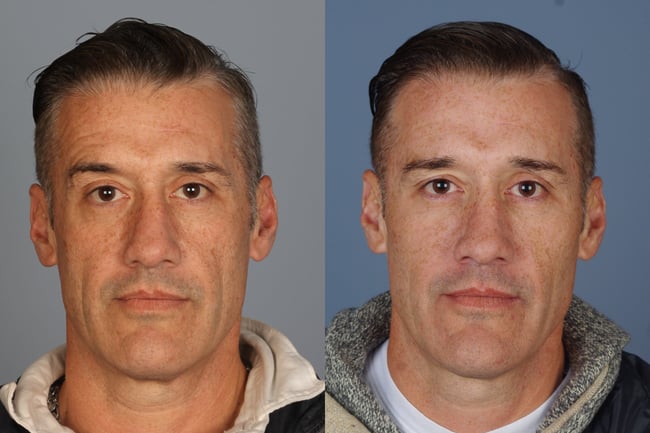
If you’re just starting to see fine lines and wrinkles, this is the ideal time to start a Botox regimen. That way you can do the most to prevent future wrinkles or worse. But Botox can be highly effective if you’re older, too. Legendary football and baseball star Deion Sanders started getting Botox injections at the age of 50 to combat crow’s feet. More and more men are also discovering the benefits of combining Botox with dermal fillers. Fillers add volume to re-plump folds and creases that have already formed from years of laughing, frowning and squinting.
Since Botox is not permanent, why not give it a whirl? Results will gradually fade after 3 months or so, then you can decide to continue with treatments to maintain your younger look or allow your face to simply age naturally. (We’re pretty sure you’ll opt for the youthful alternative.)
Benefits of Botox Injections
 With Botox being used to improve an ever-widening range of muscle-related conditions, it might be tempting to consider it a cure-all treatment. But, of course, it is not. There’s no question Botox and Dysport offer numerous benefits, but getting the best results starts with realistic expectations.
Here’s what they can do:
- Reduce the appearance and prevent the formation of dynamic wrinkles.
- These are the lines and creases that appear when muscles contract to form facial expressions. Botox can’t “fix” wrinkles caused by the aging process or environmental exposure, but it can improve the appearance of these wrinkles. Learn more here!
- Improve a host of non-skin related conditions.
- We mentioned some of the most common uses for Botox earlier. These injections can help significantly reduce chronic migraine frequency and strength, problems associated with bruxism, excessive sweating, arthritis pain, enlarged prostates and more.
- Produce results that start to appear within just a few days. Not quite instant gratification, but not bad no matter how impatient you are. Dysport works even faster than Botox. Results will continue to improve over the first 2 weeks, then remain consistent for 3 months or so. (Chronic migraine treatments do take longer to produce relief.)
- Boost skin strength, elasticity and pliability. Those are the hallmarks of youthful skin. Studies have shown that just one Botox treatment can increase pliability (flexibility) by 26% and elasticity by 20%.
- Maximum convenience. In-office appointments take just a few minutes, and you can go right back to whatever you had planned for the rest of your day.
- Relieve depression (no, seriously!). Botox is actually used to treat depression in some patients. But you don’t have to be clinically depressed to enjoy the fact that studies show Botox injections elevate the mood of many patients. What a happy side-effect!
Combining Botox with Other Skin Treatments
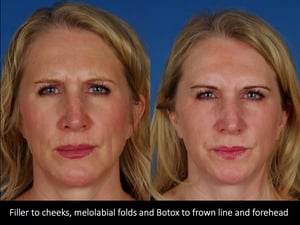 Within the world of skin rejuvenation procedures, we have many opportunities to produce even more impressive results by combining treatments. Botox is a major asset here, because it is so versatile and because it works in a unique way. At Rocky Mountain Laser Aesthetics, we can use Botox to enhance results of:
- Dermal fillers
- Chemical peels
- Laser and IPL (intense pulsed light) treatments
- Microdermabrasion
- PRP or PRFM
- Facials
- Some types of skin care products
Dermal Fillers
Fillers are the most common companion for Botox injections. These treatments work together beautifully to achieve desired re-plumping and smoothing of existing folds, creases and wrinkles while, at the same time, preventing formation of new ones. This is especially effective to reduce the appearance of crow’s feet and glabellar lines (between the eyebrows).
Combining the treatments also helps results last longer. That said, Botox and fillers are both temporary, which means you can easily work with Dr. Raval to tweak future treatments as necessary, to retain a naturally younger appearance as you age.
While Botox can help reduce smile lines, it is not effective for smoothing the little wrinkles and creases that form around the mouth. However, dermal fillers are ideal for this. And if the lines and wrinkles are still very fine, alternatives such as laser treatments or chemical peels can provide significant improvement.
Injections First
Because it takes just a few moments to administer Botox injections, you can easily add them to another procedure without adding noticeably to your time commitment. Botox won’t affect your downtime, either. However, if you are going to get Botox in conjunction with another treatment, the injections must be performed first. This is because Botox works below the skin’s surface.
Botox vs. Dysport
Although we have come to use the term Botox generically, Botox Cosmetic is in fact a specific branded product. It was the first to be used to reduce and prevent wrinkles, and is still by far the most common. However, there are other variations of injectable botulinum toxin that aim to produce somewhat different results. At Rocky Mountain laser Aesthetics, Dr. Raval sometimes recommends Dysport instead of Botox, depending on each patient’s specific concerns, medical history and goals. So what's the difference?
In most ways, Botox and Dysport are similar.
Both Botox and Dysport are:
- Safe and effective when used properly, though each produce does come with some risk of side-effects
- Approved for use on men and women at least 18 years of age who are in good health overall.
- Used to correct moderate to severe wrinkles and prevent formation of new wrinkles.
- Quick, convenient in-office procedures that require no downtime.
- Temporary, lasting about 3 months with repeat injections required for ongoing effectiveness.
What’s the difference?
Dysport:
- Differs from Botox in the potency of its trace proteins.
- Is primarily used to correct moderate to severe (but not mild) glabellar lines -- the vertical creases between your eyebrows that appear when you frown. However, Dr. Raval has also seen good results using Dysport to soften wrinkling in the eye area.
- Results may appear sooner – within a few days as opposed to a week or two for Botox.
- Is not recommended for patients who are allergic to milk.
- Costs less than Botox.
Botox:
- Is used for glabellar lines, forehead lines and crow’s feet.
- Results may last longer than Dysport.
- Is also used for therapeutic treatment of hyperhidrosis, chronic migraines, bruxism and other muscle-related conditions.
How Long Before I See Results From Botox?
Having made the decision to get Botox injections, you’re excited to see or feel the results – smoother skin with fewer wrinkles, drier underarms, more relaxed jaws, fewer migraines. Neither Botox nor Dysport produce instant results, so a little patience is required. But not much – it depends on the product used, the amount of correction you’re hoping to see, and your particular skin and facial structure. Less obvious wrinkles will seem to disappear sooner than deeper folds, for example.
The Botox (or Dysport) takes effect in stages:
- Shortly after your injections you may feel the muscles begin to relax.
- Within 24-48 hours, you may already see or feel noticeable improvement.
- By about 2 weeks, the full effect should be perceptible. That should maintain over the next 3 months or so, but improvement will begin to weaken as the Botox is absorbed by your body.
- When you notice reduced effect at around the 3-month mark, it’s time to schedule your next treatment. Results often last longer for chronic migraine treatment.
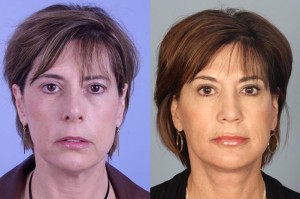
Dysport results typically appear within a couple of days. Botox results may start to become apparent that soon, or it might take a week or two for the muscles in question to noticeably relax. However, there are occasional exceptions to this. For example, if your facial creases and folds are deep, it may take more than one Botox session to realize the results you want to see. Have a look at some before & after photos of our actual clients.
If you’re getting Botox treatment for chronic migraines, you may even have to wait till after your second treatment session to feel relief, although most patients do see improvement after just a couple of weeks following their first treatment.

What to Expect From My Botox Injection
We’ve mentioned throughout this article that Botox and Dysport treatments arevery short and simple, performed right in our office. Dr. Raval, our Nurse or one of our Medical Aestheticians will wipe the skin with alcohol or a topical anesthetic, then inject a tiny amount of fluid in specific spots. The number of injections and amount of Botox used depends on the area being treated and each patient’s desired goals. Dr. Raval uses a special compact form of Botox, to minimize the amount needed.
Curious about what the actual injection feels like? We use a very thin, sharp needle so injections do not hurt. You might feel a slight “pinch” then a little pressure. And that’s it.
Side Effects of Botox
In the hands of highly skilled medical professionals such as our staff here at RMLA, Botox and Dysport are safe and present minimal risk. However, there are potential side-effects, some of which can be very serious, and we will apprise you of full information prior to any treatment. The most common side-effects, which are temporary, are:
- Discomfort or slight pain at injection site
- Numbness
- Headache
- Puffy or droopy eyelids
- Weak or achy muscles at injection site (or more diffused)
- Asymmetric appearance (for eyebrows, for example)
Studies have shown that risk of adverse side-effects does not increase when patients receive Botox treatments over an extended period of time.
We usually recommend that patients discontinue any medications such as blood thinners or muscle relaxers prior to Botox or Dysport injections, so there is no risk of interference. Dysport is not recommended for patients who are allergic to milk.
What to Expect After Your Botox Treatment
Following your injections, you can go right back to work or whatever else you have planned for your day. Generally, you do not need to do anything special for your injection sites. You can exercise as you like, lay down to sleep, or get a soothing massage without worries that the facial ring on the massage table will damage your “new” face. You can wash as normal and apply makeup, just be sure to rub gently so products don’t creep into the tiny injection sites.
How Long Does Botox Last?
Generally, we tell patients that Botox results last about 3 months. However, in some cases where Botox is used for therapeutic improvement, results can last as long as 6 months or even longer. Getting regular refresher treatments will maintain your results. Or, if you choose to discontinue treatment, your body will return to original condition once the Botox wears off.
How Much Does Botox Cost?
Botox injections are priced by unit – the amount of fluid that is injected. Units are tiny, to enable incremental precision-tailored treatments, but you will likely need several per treatment. The amount of Botox required also depends on the number and size of the area(s) being treated as well as each patient’s desired results. At the high end, we noted earlier that there are 31 injection sites for chronic migraine treatment. That can add up to 150+ units of Botox.
Here at Raval Facial Aesthetics, Botox runs (pricing as of December 2019):
- $14 per unit when Dr. Raval does the injections
- $12 per unit when our Nurse or Medical Aesthetician does the injections
Everyone Can Save with ClubTOX
Botox injections, dermal fillers and many other types of skin rejuvenation treatments require regular renewal to maintain results. The benefits are indisputable, but we understand that the cost adds up. To help patients follow an effective, consistent skin care regimen affordably, we offer special membership programs, two of which are specifically created for Botox and Dysport patients.
ClubTOX
This membership costs $75 per month. You get:
- 10% of ALL treatments and skincare, including Botox and Dysport injections (except for surgery and PRP or PRFM)
- Microdermabrasion, dermaplane, glycolic, or TCA peel for just $75 -- or, you can upgrade to chemabrasion for $20 more
- One complimentary microdermabrasion treatment every 12 months
- Periodic members-only promotions
ClubTOX Elite
This membership costs $100/month. You get all the benefits of ClubTOX plus:
- Complimentary 20 units of Botox (or Dysport) following every 12-months of membership
- Priority scheduling (within three business days) for Botox or Dysport appointments
With any membership, the monthly fee can be applied to any treatment.
Choosing a Botox Injector
Who knew there was so much to learn about Botox and Dysport injections?! The most important lesson of all, though, is this: the only thing that protects you from unhappy results and potentially dangerous side-effects is the provider you choose. Almost anybody can “give a shot,” and the Botox procedure is deceptively fast and simple. But Botox and Dysport are serious business.
It takes anatomical knowledge to know precisely where to place each injection in the muscle. And it takes practiced skill to get it right. Otherwise, there is risk of injecting into the wrong type of tissue, with results that could range from less-than-stellar appearance to permanent damage.
At Rocky Mountain Laser Aesthetics, our team is exceptionally well-trained and experienced in every aspect of Botox and Dysport treatment. And patient comfort and safety are paramount here at RMLA. Whether you are treated by Dr. Jeff Raval himself or our Nurse or one of our Medical Aestheticians, you can relax with complete confidence and peace of mind, knowing you are in the hands of a true professional.
In fact, our Dr. Raval is so proficient in the art of Botox injection, he has taught these skills to fellow surgeons and doctors from around the country for over 20 years.
What does all our skill and experience do for you? In addition to protecting your safety, it enables us to individually tailor each treatment plan to match your goals and respect your time. After all, whatever your reason for seeking treatment, your body and desired results are unique to you. We approach each situation with fresh eyes.
Our commitment to giving you the best possible results starts with a personal consultation that covers your pertinent medical history and answers all your questions. Are you looking to head off wrinkles before they become noticeable? Halt deepening of existing wrinkles or creases? Restore lost volume by coupling dermal fillers with Botox injections? Maybe you want a lifestyle lift by doing away with excessive perspiration, debilitating headaches or gnashing your teeth.
When the picture is clear, we can determine how to proceed so that you can enjoy the results you anticipate. You can’t get that from just any injector. But you can count on that at Rocky Mountain Laser Aesthetics.
Next Steps
If you are considering Botox injections, we know your goal is to look better, or feel better, or maybe both. Botox is a proven winner when it comes to cosmetic enhancements, and it is proving to be increasingly valuable as a therapeutic treatment as well. No wonder millions of Botox injections are given to men and women each year.
Botox has become so commonplace, it’s easy to forget that “getting Botox” is a medical procedure – and a serious one as we just noted.
Throughout this guide, we’ve talked about mild, moderate and severe wrinkles. It can be difficult for the average person to identify what stage their wrinkles qualify for, but Dr. Raval can help you with that. While you look at your face in the mirror from a purely personal standpoint, he looks at it as a medical doctor and experienced plastic surgeon. That, plus his exceptional reputation as a Botox specialist, enable Dr. Raval to recommend exactly the right Botox regimen for each patient.
We hope this guide has answered lots of questions for you. But we know you may have even more, especially regarding your own personal situation. We invite you to make an appointment for a private consultation, so you can decide if Botox injections are right for you.