If you’re considering getting a “nose job,” it’s important to understand your options. What are the possibilities? What are the potential problems? What should you expect -- from the surgery itself and from your new appearance?
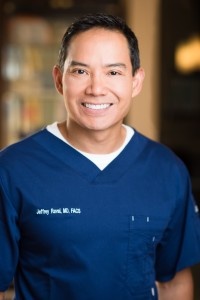
Jeffrey Raval, MD, MBA, FACS, is both a facial plastic surgeon and an Ear, Nose and Throat specialist. His practice focuses on the face, but noses are his favorites. He’ll be the first to tell you that he takes the greatest pride and joy in combining his surgical skill and artistic talent to help each patient transform their nose to achieve a happier result. His philosophy is “less is more,” emphasizing natural looking outcomes.
Types of Rhinoplasty
A skilled, experienced rhinoplasty surgeon can make significant or subtle changes to your nose to:
- Make it more symmetrical
- Reduce or enlarge its overall size
- Change its width at the bridge
- Change the size of your nostrils
A nose job can change your profile if you have a noticeable depression or hump on the bridge, and it can modify the tip of your nose if it is hooked, drooping, enlarged, bulbous or upturned. Some depressions and asymmetries can be corrected without surgery, using injectable dermal fillers.
No one’s face is perfectly symmetrical, so your goal should be a harmonious, well-proportioned overall appearance. Your nose is made up of several parts that affect outward appearance as well as internal functionality. Nose surgery can make any of the following structural alterations. Depending on your aesthetic goals, Dr. Raval may recommend a combination of changes.
Straighten
If your nose is noticeably crooked, straightening it can bring your entire face into balance. Crooked noses are most often caused by a childhood or adult injury such as a broken nose that results in a deviated septum. (The septum is the structure that forms the centerline of your nose.) However, crookedness can also be hereditary, the result of a congenital abnormality, or an unwanted after-effect of previous rhinoplasty. You may not like the way your crooked nose looks, but if you have a deviated septum, there’s a good chance you also suffer from difficulty breathing. Nose surgery can fix that, too.
 Reduce Overall Size or Width
Perhaps your nose looks overly large or the bridge appears too wide for your face. Noses can appear wider if you have no elevated bridge (common among certain ethnic groups) or as the result of previous nose surgery.
Reduce Projection
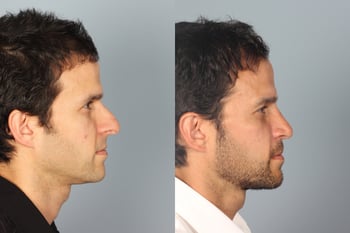
Some people feel that their nose is too long – that is, it protrudes farther from your face than you would like. This is often most noticeable in side view. In certain instances, this can be corrected with only a tip refinement instead of whole-nose surgery.
Smooth the Lines
Lots of people have a hump or a bump, or a depression, along the top of their nose. Rhinoplasty can make your nose look smoother and sleeker.
Tip Refinement
This technique is used to revise just the end of your nose, to eliminate a bulbous, pointy, drooping, or upturned tip. Surprisingly, that may be all you need to balance the shape of your nose and bring your nose in balance with the rest of your features. For some patients, tip refinement surgery can even make your face appear slimmer.
Unlike other rhinoplasty procedures, tip surgery involves only reshaping or removing cartilage, not altering nasal bone or other internal nasal structures. That means the procedure can be completed much faster.
Change Nostril Size
The configuration of your nostrils can affect the overall appearance of your nose, making it look out of proportion with the rest of your face. Nostrils can be flared or “upturned,” or they can even be noticeably different sizes. In some cases, nose tip refinement may be all the surgery you need to make desired changes to your nostrils.
Elevate the Bridge
Some ethnic groups have a high bridge at the top of their nose, between their eyes. Others -- Asians, for example -- tend to have no elevated bridge at all. If you want to raise the bridge of your nose, rhinoplasty can do that. You may even be a candidate for dermal fillers instead of surgery.
Septoplasty: Rhinoplasty for Deviated Septum
Beyond making cosmetic changes, a nose job can also correct breathing problems caused by genetic abnormalities or injury. Nasal valve surgery and septoplasty are procedures that can straighten a deviated septum, remedy a collapsed valve, or fix other interior defects.
Reconstructive surgery often involves straightening your nose, since the most common problem is a deviated septum. However, if your breathing is impaired by tiny projections inside your airways, Dr. Raval will remove or reduce them. Both cosmetic and corrective issues can be addressed in a single surgery, if desired.
Restoring proper breathing is essential for your continued good health.
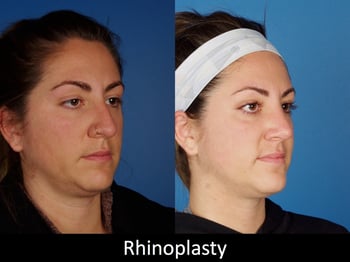 Revision Rhinoplasty
Occasionally patients are not fully satisfied with the outcome of their primary rhinoplasty, so they come to Dr. Raval to inquire about revision surgery. You want a revision because you still don’t like the way your nose looks or because now, post-surgery, you’ve developed breathing problems. This happens when an overly aggressive initial rhinoplasty results in collapsed airways.
At Raval Facial Aesthetics, we prefer patients wait 12 months from their initial surgery before proceeding with a revision. This is because it can take up to one year for all your swelling to subside and gradual changes to be complete. Rarely, Dr. Raval sees a patient whose negative results from previous nose surgery are so pronounced, he recommends immediate revision surgery instead of waiting.
Redoing a nose job is usually more complex than the initial procedure. It takes longer, and there’s an increased risk of infection, although recovery time and process are the same as for first-time nose surgery. Whether revision rhinoplasty is the right solution for you is something you should discuss in person with Dr. Raval. Our goal (and yours, too, we know) is to get surgery right the first time, so you never have to consider revision rhinoplasty.
Open vs. Closed Rhinoplasty
There are two different types of rhinoplasty techniques – open and closed. Closed is the older, traditional technique, whereas open rhinoplasty is a newer, more advanced method – the one Dr. Raval uses.
With a closed technique, all incisions are made inside the nose, so there is no risk of visible scarring. On the other hand, the surgeon cannot directly see the surgical site, so he or she has to work by feel, using tools to “see” the procedure as it unfolds.
With an open rhinoplasty, the surgeon makes a small incision at the base of the columella – the soft tissue that forms the center of the nose, separating the nostrils and airways on each side. By making the external incision, Dr. Raval is able to gently lift the skin and see the site directly as he works.
This technique takes a little longer than a closed rhinoplasty (the time it takes to make the columella incision, lift the skin and then replace it and close the incision). However, it allows Dr. Raval to work more precisely and control even the tiniest movements. It also enables him to see first-hand if any adjustments to his surgical plan are needed in order to achieve desired results.
Although an open rhinoplasty does involve an external incision, chances are slim that you will have a noticeable scar.
How is a Rhinoplasty Done?
Rhinoplasty is an outpatient surgery, so you will not need to stay overnight in a hospital. Generally, you can go home within 1-1.5 hours following surgery. If you choose to undergo this procedure, you will need to arrange for someone to drop you off and pick you up, and your surgeon may recommend that someone stay with you the first night.
The surgery itself follows these steps:
- You will be given general anesthesia so you will be asleep for the entire procedure. This is quite safe for healthy patients. If you have concerns, your surgeon can arrange a phone call with an anesthesiologist to address your questions.
- Your surgeon will make the incision. If your procedure includes changing the size of your nostrils, there may be an additional incision in the natural crease on each side.
- Your surgeon will sculpt your nose according to the aesthetic goals you agreed upon during your consultation. This may require removal of bone or cartilage to reduce nose size or addition of cartilage grafts to increase size or change shape.
- Grafts are tools your surgeon may use to provide better shape and support to your nose. If you have thin skin, there is a risk that a graft may become visible once swelling has subsided. However, an experienced surgeon will anticipate this potential problem and avoid it by using smaller or thinner grafts or by covering the grafts with collagen or other material. Grafts are not always needed, but sometimes they are needed on a case-by-case basis.
- Usually cartilage for grafts comes from your septum, but it can also come from your ear or a cadaveric graft may be used.
- If you have a deviated septum, your surgeon will straighten it and/or reduce any projections that are impairing your breathing.
- Your surgeon will carefully re-drape the skin and then close the incision(s).
- You may have heard that some surgeons use steroid injections such as Kenalog to improve cosmetic results following rhinoplasty. This is safe, if used conservatively.
Before Your Surgery
The healthier you are, the better prepared your body will be for surgery. However, some additional precautions to take would include; no smoking at least two weeks prior to the surgery, and no drinking alcohol at least one week before. Exercising prior to surgery has also been shown to improve recovery, especially if you don’t exercise on a regular basis.
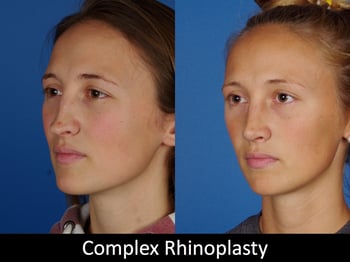 After Your Surgery
When you wake up in the recovery room, you will have a cast on the bridge of your nose and intranasal stents on the inside of your nose. The stents will remain in place for 3-7 days while the cast usually stays on for one week. That means you’ll have to wait to see initial results of your nose reshaping.
You should also expect to have bruising and swelling for 2-4 weeks, and slight persistent swelling that may take 6-12 months to fully disappear. You should expect to be out of work for up to 2 weeks, although many patients return sooner depending on the specifics of their surgery. You will also be restricted from other certain activities for 2-4 weeks after surgery.
You will be given detailed instructions regarding care of your surgical site, when to follow up to have bandages and stitches removed, and so on. Some patients ask about using herbal remedies such as Arnica or Bromelain to assist healing. These have not been proven to be especially beneficial, but you may try them if you wish. At Raval Facial Aesthetics, we offer complimentary laser treatments to decrease bruising, which is very beneficial.
Rhinoplasty produces long-lasting results. If you’re young, remember that your body changes naturally over time, and that affects your face. The best way to maintain your new appearance is to use sunscreen and make healthy lifestyle choices.
Revision Surgery
Occasionally patients are not fully satisfied with the outcome of their primary rhinoplasty, so they ask about revision surgery. At Raval Facial Aesthetics, we prefer patients wait 6-12 months from their initial surgery before proceeding with a revision. This is because it can take up to one year for all your swelling to subside and gradual changes to be complete.
Ethnic Rhinoplasty
Every person is unique, and their nose is no exception. Ethnic noses can have distinct traits, some subtle or some more obvious. Your nose may have a dorsal hump, wide nostrils, no elevated bridge between your eyes, or a bulbous tip. Dr. Raval can reduces those traits if that’s your preference, but he says an increasing number of patients are opting for just a bit of change. Many people have some minor changes that they’d like to see, but they don’t want to deny the heritage that they’re proud of. That fits beautifully with Dr. Raval’s “less is more” surgical philosophy.
If you’re considering ethnic rhinoplasty, there are three challenges to be aware of:
- Those with darker skin – notably those of Hispanic, Middle Eastern, Indian, or African descent – tend to have thicker skin. That can mask subtle structural changes, especially alterations near the tip of the nose. However, with delicate skill, Dr. Raval can thin the underside of nasal skin as needed to allow changes to shine through as desired.
- If your nose has a large, bulbous tip, there’s a good chance you also have a shorter-than-usual septum. Under normal circumstances, this doesn’t matter, but for nasal surgery Dr. Raval often uses cartilage from the septum to make structural changes. Without enough cartilage, options may be restricted. Surgery that makes your nose visibly narrower also makes your interior air passages narrower. This increases risk of post-surgery breathing difficulties.
- In the past, when patients wanted to elevate the bridge of their nose, surgeons used silicone implants. This increases risk of infection, so Dr. Raval uses nasal cartilage, cadaveric or cartilage from the ear, to effect that change. For patients who want just a little elevation, he may recommend dermal fillers instead. We call that a “liquid nose job.” The procedure is quick and only minimally-invasive, but dermal fillers must be renewed periodically, whereas surgery is permanent.
 Rhinoplasty Costs
Because every surgery is patient-specific, costs can vary depending on the details. As with any surgery, the total cost comes from several sources beyond the surgeon’s fee, including:
- Anesthesia fees
- Surgical facility or hospital costs
- Post-surgery medications
You will be given detailed cost information before making your final decision to have surgery.
Health insurance does not typically cover cosmetic surgery. However, if you are having reconstructive surgery, that may be covered. If you’re having both cosmetic and corrective work done, your insurance may cover part of the cost. We strongly recommend you speak directly to your insurance carrier in advance, to clarify your personal coverage.
If you’re considering septoplasty or nasal valve repair, your insurance company may require you to try a non-surgical treatment such as Flonase first. If that fails to resolve your problem after two weeks or so, this will confirm surgery is medically necessary.
Revision surgery may cost more, because these procedures are more difficult to perform. There is more scar tissue present, which makes it the surgery more difficult and can make healing less predictable. Often, Dr. Raval will have to undo what was done before and then begin to reshape your nose. The amount of difficulty and the risk of infection or poor healing increase with the number of prior surgeries.
Rhinoplasty Results
Whether your goal is visible change, better breathing, or both, realistic expectations are the key to a happy outcome. The perfect nose doesn’t exist. That’s just as well, because it wouldn’t look good on every person’s face. Faces come in a wide range of sizes and structures, and not one of them is perfectly symmetrical.
But you can still make changes, large or small, to achieve a nose that you like better. Doing that can boost your self-image and confidence, and that’s a result anyone can appreciate.
No matter how old you are, your face will continue to evolve throughout your life. So even though your surgical alterations will be permanent, your face will still age along with the rest of your body.
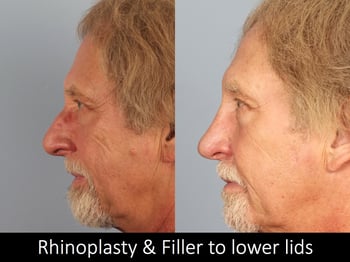
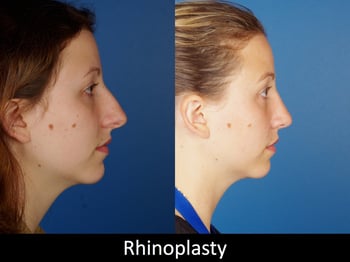 Rhinoplasty Before and After
What can rhinoplasty do for you? Improvement, but not perfection.
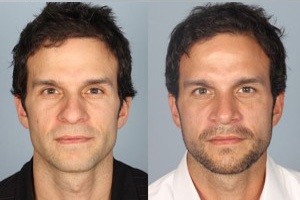
We are all different – our overall facial structure and skin type as well as the shape and size of our nose. That means your results won’t be exactly like someone else’s. Nonetheless, you can get a good idea of the possibilities by checking out before and after photos of patients who have already chosen rhinoplasty.
Pay particular attention to photos of people similar to you in age and gender, with similar pre-surgery concerns. You may look for before and after photos on the internet, but the most valuable examples are prior patients of your prospective surgeon. This is the person you will be trusting to help you create your new nose, or finally restore your breathing. Before and after photos are one of the best ways for you as a prospective patient to assess their surgical skill and artistic talent. And that’s why we encourage you to review photos of some of our past Raval Facial Aesthetics and ENT patients.

Understanding what is possible to achieve (or not) for the type of changes you wish to make will help you make an informed, comfortable decision about whether to have rhinoplasty. If you choose to move forward, you can be confident that Dr. Raval will create natural looking results, whether you’re looking for cosmetic changes, functional improvement, or both.
 Am I a Good Candidate for a Rhinoplasty?
If you’d like to change the appearance of your nose, or you’re bothered by breathing problems, rhinoplasty could change your life. You’re a good candidate if you’re in good health, a non-smoker, and old enough that your face has stopped growing. Realistic expectations of the outcome are a must, too.
And one more thing: you’re a good candidate for nose surgery as long as you’re making the changes to please yourself. What anyone else thinks about your nose, or its contribution to your face, should not dictate whether or not you choose surgery – or even cosmetic changes such as a liquid nose job.
Once your face has stopped growing, you’re old enough to safely undergo rhinoplasty. Usually, this is at least age 17. But you’re never too old for rhinoplasty, as long as you are in good health. At Raval Facial Aesthetics, we have many patients who choose rhinoplasty surgery later in life. Overall good health and not smoking are so important because you want your recovery to go as quickly and smoothly as possible. Smoking restricts blood flow crucial for healing.
If you’re suffering from breathing problems, rhinoplasty can literally improve your health. Snuffling and snoring are certainly annoying and frustrating. But when you cannot breathe deeply or easily enough, your body doesn’t get enough oxygen. Over time, this can lead to very serious secondary health challenges. There is nothing “cosmetic” about this problem. Dr. Raval recommends that you get help to improve your breathing as soon as possible. There is no reason to suffer, and there is even less reason to put your overall health at risk.
 Alternatives to Rhinoplasty
You may have heard or read something about a “liquid nose job.” It exists! The name is just a fun way of indicating that Dr. Raval uses dermal fillers instead of invasive surgery to produce the results you want. Obviously, a liquid nose job is not going to work for every possible change, but it does offer several distinct benefits:
- If the changes you desire are relatively minor – say, smoothing the appearance of bumps or depressions or a droopy tip, or even rebalancing a slightly crooked nose-- fillers may be all you need.
- If you don’t feel ready to commit to surgery, you can get a “temporary fix” and see what you think, then make the decision about surgery later.
- If you’re under about 17 years old, your face has not finished growing. We don’t recommend rhinoplasty until that happens, but if you’re younger and really want to change your nose, fillers can be a safe, appropriate option.
The truth is, dermal fillers are so precise and so versatile, Dr. Raval often uses them in conjunction with surgical procedures, to add the finishing touch. Keep in mind that dermal fillers are naturally absorbed by your body over time, to maintain your nose’s new look you’ll need to get refresher treatments. How often will depend on which filler Dr. Raval uses and your own body – it could be a year or even two. Surgical rhinoplasty, on the other hand, is a permanent solution.
Depending on your age and aesthetic goals, you may find that rhinoplasty is ultimately less expensive than years of repeated dermal filler treatments.
 Rhinoplasty Risks
There are risks and potential complications associated with any type of surgery. These include bleeding, infection, and potential adverse reaction to the anesthesia. Major risks associated specifically with rhinoplasty include:
- Unsatisfactory results. Disappointment often stems from unrealistic expectations. Remember, no nose can ever be “perfect,” but you can still achieve significantly positive changes. You may still have a small bump on the bridge of your nose, or you may still have continued (but improved) asymmetry.
- Internal scarring that interferes with air passage. Dr. Raval uses post-operative splints to minimize this risk.
- Infection. This is rare in normal healthy patients, and the risk is further minimized because Dr. Raval always performs procedures in an accredited surgical center to ensure the greatest possible patient safety.
- Recurring nosebleeds.
- Persistent numbness in or around the nose.
- Persistent pain, swelling, or discoloration.
Your surgeon will discuss all the pros and cons with you and confirm that you fully understand them before you commit to surgery. Ultimately, only you can decide if the benefits of rhinoplasty outweigh the possible risks.
Rhinoplasty Recovery Time
The smoothest, quickest recovery starts by following your pre-surgery instructions, because good health enables your body to heal faster. Exercise is highly recommended. And if you smoke, you’ll have to quit at least two weeks in advance, and remain smoke-free following your surgery, too.
At first after your surgery, you will have stents inside your nostrils and you may have a cast over the bridge of your nose. Dr. Raval will remove these a week later, and you’ll get your first peek at your new nose. It won’t look much like the final result, though. You can expect swelling and bruising for 2-4 weeks, and a bit of residual swelling may last several months. Nonetheless, you’ll be able to resume work and other daily activities within a couple of weeks. Maybe even sooner.
If you elect to have tip refinement surgery instead of a full rhinoplasty, your procedure will be quite a bit shorter. However, your recovery time and process will be the same as for any nose surgery.
A liquid nose job is an entirely different story. No surgery, no downtime, although you may experience some slight bruising or swelling immediately afterward. You can get a “liquid nose job” on your lunch hour.
Rhinoplasty Scars
With the open surgical procedure that Dr. Raval uses, you will have a tiny but virtually invisible scar across the bottom of your columella (the cartilage that separates your nostrils at the base of your nose). The older closed rhinoplasty technique produces no visible scars, as there are no external incisions.
 Follow Doctor's Orders
You will receive detailed post-surgery instructions to care for your nose after you return home. It is vital that you follow these instructions. After all, you want to recover as quickly as possible, without developing an infection or other problems.
You’ve read above that we encourage exercise following rhinoplasty. Moving around promotes good circulation, and it boosts morale. But don’t overdo it! You may feel surprisingly good following your surgery, but just because you aren’t bedridden doesn’t mean your body isn’t hard at work healing your nose. When you do things to “distract” your body’s healing efforts or to weaken them, you are prolonging your eventual recovery. Not only that, failure to follow Dr. Raval’s orders can undo your surgery or diminish the results you wanted to achieve.
So resist the temptation to overdo – no heavy lifting or bending over that lowers your head or strenuous exercise. It’s only for a week or two, then you can fully return to normal activities. In the end, you’ll be glad you followed those orders. Not good at relaxing? Prior to your surgery, stock up on movies or books, or order in a load of Netflix shows and binge!
Choosing the Right Rhinoplasty Surgeon
Surgical skill plays a vital role in the quality of your rhinoplasty outcome. These tips will help you select the surgeon who has the training, experience and aesthetic talent to help you achieve your goals.
- >Confirm that they are board certified in the field of facial plastic surgery.
- Ask about their specific experience in rhinoplasty surgery and experience with your specific aesthetic and/or breathing problems.
- Ask to see before and after photos of patients with similar concerns as yours.
- Ask for references of other patients, and speak to them about their experience before and after their surgery.
- Make sure to pick a surgeon you feel comfortable with and trust. You’re choosing a medical partner to make a lifelong change in your facial appearance, improve your breathing, or both.
During Your Rhinoplasty Consultation
This is your opportunity to get all your questions answered. Do not be shy or worried that you’ll appear nervous. That’s perfectly normal. In particular, you’ll want to make sure to discuss:
- Your aesthetic and/or breathing improvement goals
- Any medical conditions you have and medications you currently take
- Your tobacco, drug and/or alcohol use
- Any previous surgeries you have had
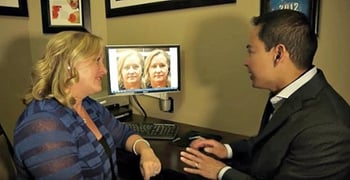
This information will help the surgeon understand your current health status, to determine whether you’re a good candidate for rhinoplasty surgery. The surgeon may also examine your face and take photographs and measurements. Together you will explore your surgical treatment options. The surgeon will explain the outcomes you can expect as well as the risks involved and then recommend a course of action.
About Dr. Raval
Jeffrey R. Raval, MD, MBA, FACS is a facial plastic surgeon, board-certified by the American Board of Facial Plastic and Reconstructive Surgery as well as the American Board of Otolaryngology. He is a member of the American Medical Association, Colorado Medical Society, Denver Medical Society, and American Academy of Cosmetic Surgeons. Dr. Raval owns and directs Rocky Mountain Laser Aesthetics. Dr. Raval trains other doctors and nurses interested in learning about best practices in the injection of filler and botulinum toxin.
Next Steps
So what can rhinoplasty do for you? Having read this through all this, you know that depends on several factors, most importantly your goals. Whether you have more questions or you’re ready to move forward, give us a call or complete the consultation form at the top of the page.