
The core difference between a deep plane facelift and a traditional facelift is surgical depth. A traditional facelift repositions the SMAS—the muscular layer just beneath the skin. The deep plane facelift technique releases and lifts deeper facial structures, including the retaining ligaments and fat compartments that support the midface. That anatomical difference drives everything: the results, the longevity, and the type of patient who benefits most from each approach.
If you’ve been comparing your facelift options, understanding what happens below the surface is the clearest way to see why these two procedures aren’t interchangeable.
What Is a Traditional Facelift?
A traditional facelift targets the superficial musculoaponeurotic system (SMAS), a fibromuscular layer in the face that lies beneath your skin and above the deeper facial muscles. Tightening and repositioning this layer lifts the lower face and neck, addresses jowling, and restores definition along the jawline.
For patients with mild to moderate facial aging, a traditional facelift can deliver meaningful, lasting improvement. It’s a well-established procedure with a strong track record when matched to the right candidate.
What Is the Deep Plane Facelift Technique?
The deep plane facelift technique operates at a fundamentally different anatomical level. Rather than working above the SMAS, it releases the retaining ligaments that anchor facial tissue to the underlying bone. These ligaments loosen over time, allowing the midface to descend and deepening the nasolabial folds—changes that a traditional facelift often cannot fully address.
By releasing and repositioning the deeper structures as a unified layer, the deep plane approach moves tissue back toward its original anatomical position rather than relying on skin tension. The result tends to look more natural and last longer because the lift is supported by structure, not stretch.
This technique is particularly well-suited to patients with more advanced facial aging, significant midface descent, or deep nasolabial folds, and it’s one of the signature procedures I perform at Raval Facial Aesthetics.
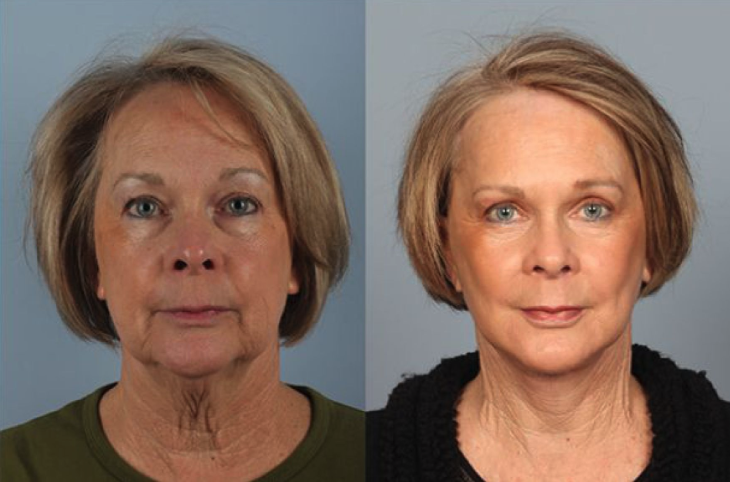
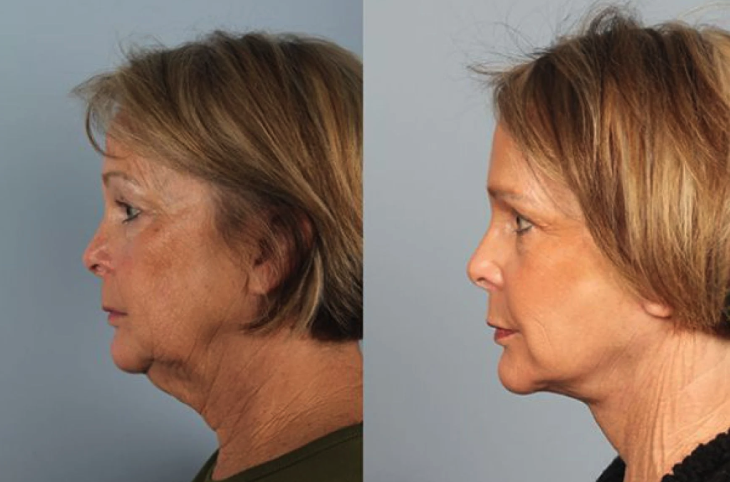
Facelift Before and After by Dr. Jeffrey Raval in Denver, Colorado
Key Differences at a Glance
Traditional and deep plane facelifts both address facial aging, but they work at different depths and produce different outcomes depending on your anatomy and degree of facial aging. Here’s how they compare:
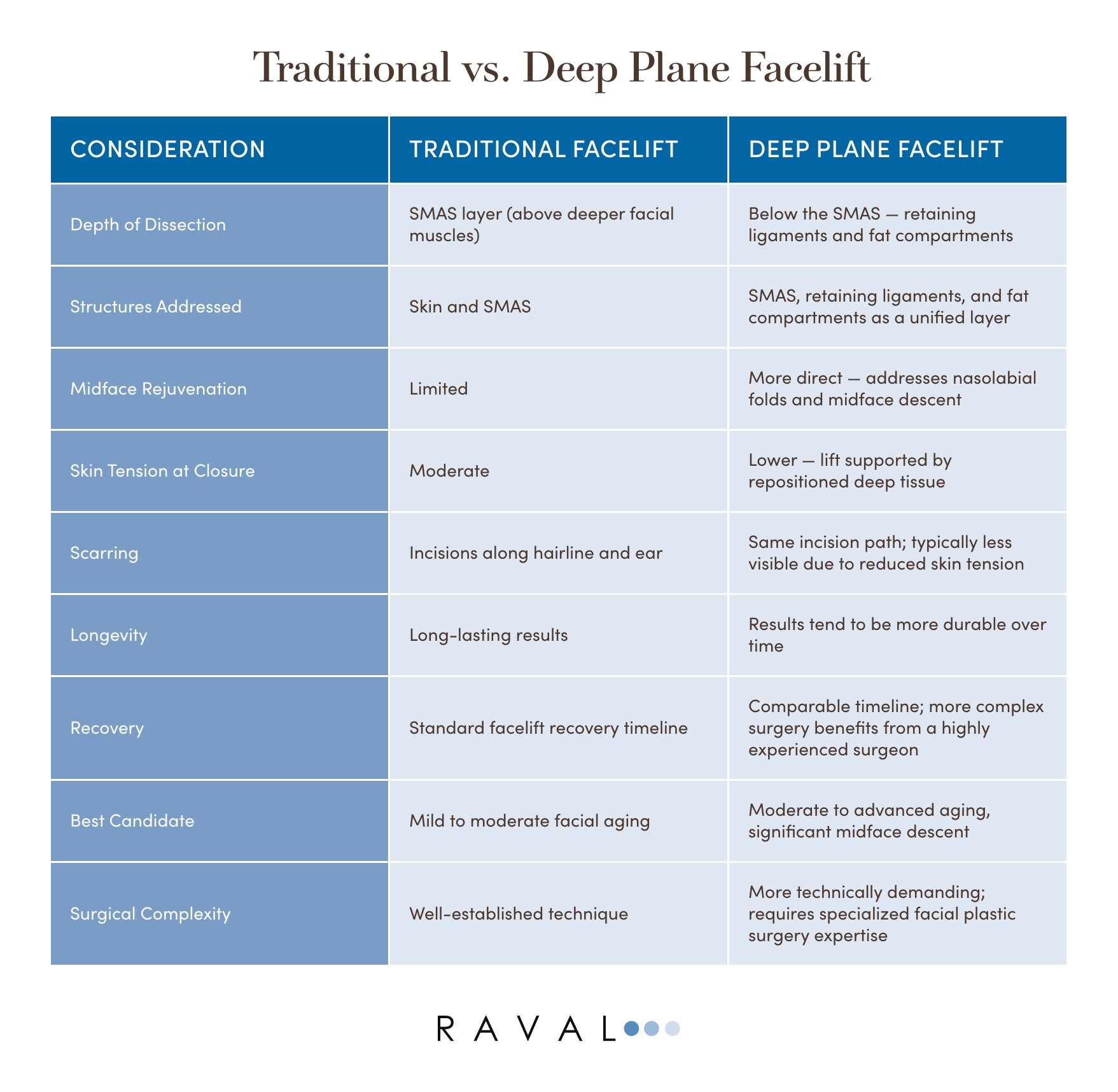
Determining where you fall on this spectrum is something I carefully assess in every consultation: the right procedure depends on your anatomy, not a formula.
Facelifts are well-established procedures with a long track record of safety. As with any surgery, there are potential risks to be aware of, and I take time to ensure you feel fully informed.
What About Scars?
Incision placement for both procedures follows a similar path—typically along the hairline, in front of and behind the ear—so deep plane facelift scars and traditional facelift scars begin in the same locations.
The meaningful difference is tension. Because the deep plane technique achieves lift by repositioning deep tissue rather than by skin traction, the skin closes under less strain. Reduced tension at the incision line generally supports finer, less conspicuous scarring as healing progresses.
With proper postoperative care and precise surgical technique, deep plane facelift scars are typically well-concealed and continue to improve over the months following surgery.
Which Facelift Is Right for You?
The answer depends on your anatomy, the degree of facial aging you’re experiencing, and your long-term goals. Both procedures have a place, and choosing between them isn’t about which is “better” in the abstract, but which is the right fit for your face.
As a double-board certified facial plastic surgeon with a focus on natural, balanced outcomes, I take a conservative approach to every surgical recommendation. When you come in for a consultation, I’ll evaluate your facial structure, discuss what you’re hoping to achieve, and give you a straightforward assessment of which approach makes the most sense for where you are right now.
Take the Next Step
If you’re ready to explore your facelift options, I’d welcome the conversation. Call our office today at (303) 381-3223 or request a consultation using the online form.
Leave a Reply