Rapid, significant weight loss can sometimes reveal changes in the face and neck that you might not have anticipated. They’ve been dubbed “Ozempic neck” and its cousin, “Ozempic face,” because these changes typically occur if you’ve been taking GLP-1 weight-loss medications such as Ozempic®, Wegovy®, or Zepbound®.
These medications have helped many people achieve substantial weight loss and improve their overall health. Many women and men, however, are self-conscious about the loss of definition along their jawlines and loose neck skin that results from the loss of fat that once provided support beneath the skin. Similar changes can occur after bariatric surgery, lifestyle-related weight loss, or any significant reduction in body weight.
What Does Ozempic Neck Look Like?
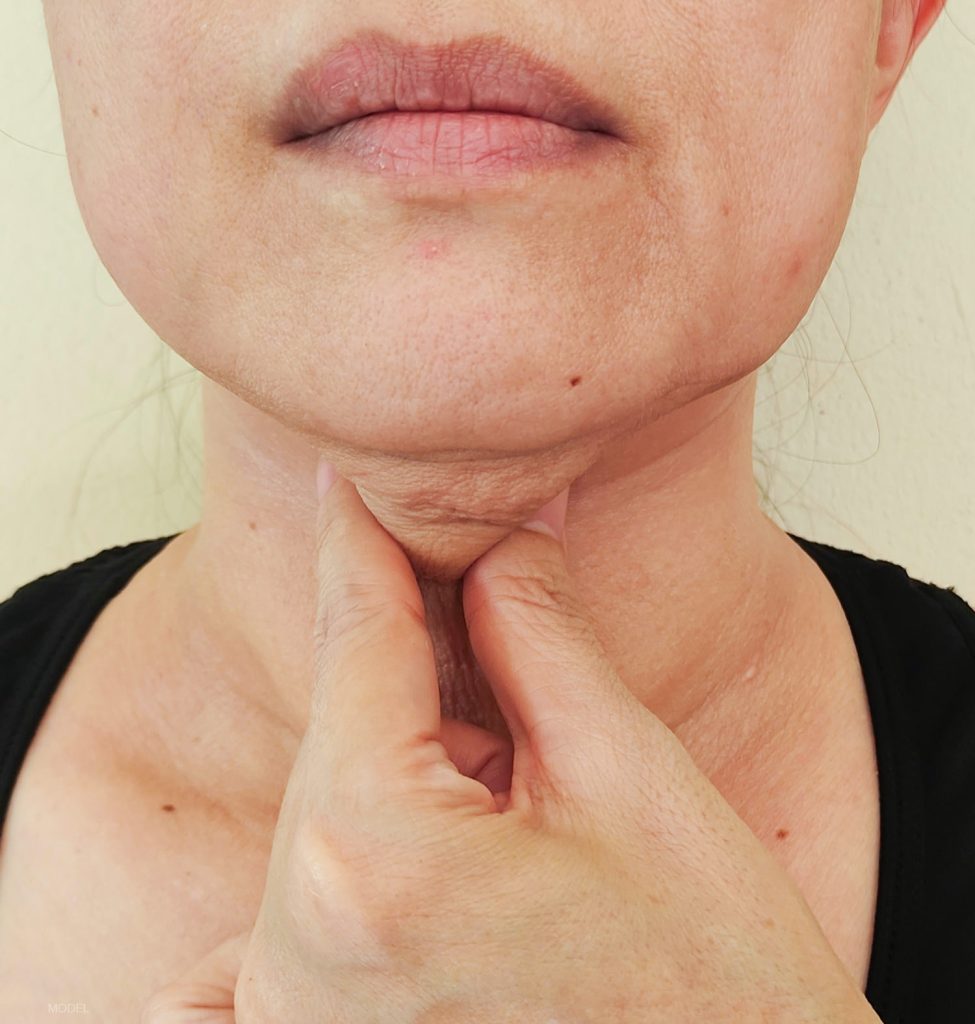
Ozempic neck refers to loose, sagging skin and soft tissue laxity that develops beneath the jawline and around the neck after significant weight loss.
Common signs include:
- Excess skin beneath the chin
- Increased neck banding
- Jowling along the jawline
- Loss of jawline definition
- A “turkey neck” appearance
- A more aged or tired look despite successful weight loss
Many patients tell me they feel healthier and more confident after losing weight, but are surprised by how much older their neck appears.
Why Does It Happen?
As we age, our skin naturally loses collagen and elastin, reducing firmness and elasticity. Facial and neck fat also decrease over time. Rapid weight loss can accelerate this process by reducing the underlying fat that helps support the skin. When weight is lost quickly, the skin often cannot “snap back” and adapt to the body’s new contours.
The effect tends to be more noticeable in older patients and those who lose a significant amount of weight over a short period. Genetics, skin quality, and the total amount of weight lost also play a role.
Can You Prevent Ozempic Neck?
While it is not always possible to prevent loose skin after weight loss, a gradual approach may help minimize the severity. Experts generally recommend losing weight steadily rather than as quickly as possible. Good nutrition, hydration, strength training, and adequate protein intake can also support skin health while losing weight.


How Can Ozempic Neck Be Fixed?
The best treatment depends on the degree of skin laxity. If the changes are mild, nonsurgical skin-tightening treatments may provide modest improvement. However, these technologies cannot remove excess skin or reposition deeper tissues.
For more significant laxity, a neck lift is often the most effective solution. It addresses loose skin, neck banding, and excess tissue to restore a smoother, more defined contour beneath the chin and along the jawline.
When weight loss has affected both the neck and lower face, a deep plane facelift provides more comprehensive improvement than a traditional facelift and neck lift. By repositioning deeper facial structures rather than simply tightening the skin, a deep plane facelift can restore natural jawline definition and neck contour while maintaining a balanced, natural-looking result.
The Importance of Timing
I generally recommend reaching and maintaining a stable weight before considering facial rejuvenation surgery. This allows us to evaluate your final contours and create a treatment plan designed for long-lasting results.
At Raval Facial Aesthetics, every treatment recommendation is tailored to the individual. Whether you’re experiencing mild neck laxity or more significant changes after weight loss, the goal is the same: restoring facial balance while preserving the natural appearance that makes you uniquely you.
To discuss your options, use the online form to request a consultation, or call us at (303) 381-3223 to schedule an appointment.
Leave a Reply