





+ +

ASK THE DOCTOR

SPARING EARS FROM ACHING WHILE FLYING HIGH
By Jeffrey Raval, MD, FACS

You’ve likely been on an aircraft at some point and witnessed the flight attendants providing passengers, young and old, with paper cups to hold to their ears as the plane gains altitude. Don’t waste your time. That practice does nothing to ease the pain of eardrums that can’t seem to equalize. The only thing we can figure is that the airlines subscribe to the theory that if you’re going to cry (and some infants and children do when their ears won’t equalize), then the flight attendant is going to make you look pretty darn silly while you’re crying.

Usually the problem is caused by the Eustacean tube, a valve that runs from the middle ear (behind the eardrum) to the back of the throat or soft pallet, an area called the Nasopharynx that opens into the nasal cavity. When the Eustacean tube can’t open, the pressure in the ear doesn’t equalize as the plane gains altitude.

When you consider that most planes travel at 30,000 ft. and the air in the cabin is pressurized to approximately 8,000 ft., even people who don’t normally have trouble with their ears at sea level can be affected in the air.

I recommend to patients that they try one of the following to better manage their discomfort as the plane ascends:

Chew gum during takeoff and landing to help alleviate any irritation or pain from their ears not equalizing well. The gum works because the muscles around the Eustacean tube contract a little while a person chews and swallows. The change in muscle tension works to effectively diffuse or even out the pressure between the atmosphere and the middle ear.

Take an over-the-counter decongestant an hour before their flight is scheduled to take off to help with pressurization equalization. Afrin is one such recommended decongestant.

I recommend swallowing repeatedly, even if you’re not chewing gum, as the aircraft gains altitude to put an end to the unpleasant tightness and pressure in the ear during take off and landing too.

Because infants can’t swallow on command, many mothers nurse their infant discretely during takeoff or landing or give the infant a baby bottle. Likewise, a toddler can benefit by drinking from a bottle during takeoff and landing.

Contact your physician if you’re unable to manage traveling by air because of your ear pressurization or if the problem continues to increases. Or email me at jeffrey@ravalmd.com for information.

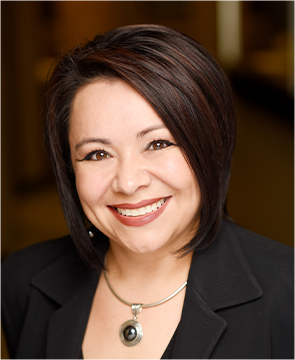
Jeffrey Raval, MD, FACS practices at Raval Facial Aesthetics & ENT, PC in Denver, Colorado. He volunteers at Denver Inner City Health and is double board certified by the American Board of Facial Plastic Surgery and Otolaryngology/Head and Neck Surgery. He is owner and Medical Director of Rocky Mountain Laser Clinic in Cherry Creek North where his skilled staff performs tattoo removal, the latest in acne treatment and hair removal. Dr. Raval is also a partner in Faces First, cosmetic surgery, at Harvard Park Medical Center and in Lone Tree. He limits his practice to neck and head and is known as The Nose Guy by other surgeons in Denver for his fine rhinoplasty and revision rhinoplasty surgery. He can be reached at 303.381.FACE (3223).

+ +